

What Makes a Great Pool Sun Lounger?

A pool lounger and a garden sun lounge can look almost identical in a showroom. By the water, they behave nothing alike. One shrugs off wet swimmers, chlorine splash and relentless sun for a decade. The other starts to stain, stiffen and rust within a couple of summers.
The difference is in the detail, and it is worth knowing before you buy. A pool is the harshest spot in any backyard for furniture, so a great pool lounger is built for that specific job rather than for a quiet shaded corner. Here is what separates the two.

Pictured: A pool is the harshest spot in any backyard, so a pool lounger has to be built for it. While performance fabrics such as Olefin and Sunbrella repel water, to reduce soaking of cushion.
A pool lounger is not just a sun lounge by the water
A garden sun lounge is designed to sit in a dry, often shaded spot and look good. A pool lounger has to earn its place in a wet, bright, chemical heavy environment, and that changes everything about how it should be built.
It gets sat on by dripping swimmers. It cops chlorine or salt every time someone climbs out. It sits in full sun for hours, then gets rained on overnight. A piece built for the patio will not last that, no matter how good it looks on day one.
So the test for a pool lounger is simple. Will it still look and work this well after years of wet feet and hard sun? Everything below comes back to that question.
Materials built for a wet environment
Start with the frame, because around water the enemy is corrosion. Powder coated aluminium is the standout. It does not rust, it stays light enough to drag into the sun and back into the shade, and it holds its finish through constant exposure.
Resin and rope styles work beautifully here too, as long as they are built on that same aluminium frame. Our resin wicker is coloured to the core, so it does not flake or fade, and rope styles dry fast and suit a modern poolside. What you want to avoid by a pool is untreated steel or natural timber, which corrode or need constant oiling in these conditions.
That is the first thing to check. Ask what the frame is made of before anything else.
Cushions that handle chlorine, salt and sun
This is where a pool lounger lives or dies. A standard cushion soaks up water, holds it, and starts to smell or grow mould within weeks of poolside life.
The answer is quick dry foam, a reticulated open cell foam that lets water drain straight through rather than holding it, often with antimicrobial properties to keep mould at bay. Pair it with the right fabric and the cushion dries fast and stays fresh. For the fabric itself, look for solution dyed acrylic such as Sunbrella, where the colour runs through each fibre so chlorine, salt and UV cannot bleach it the way they strip a cheaper printed fabric.
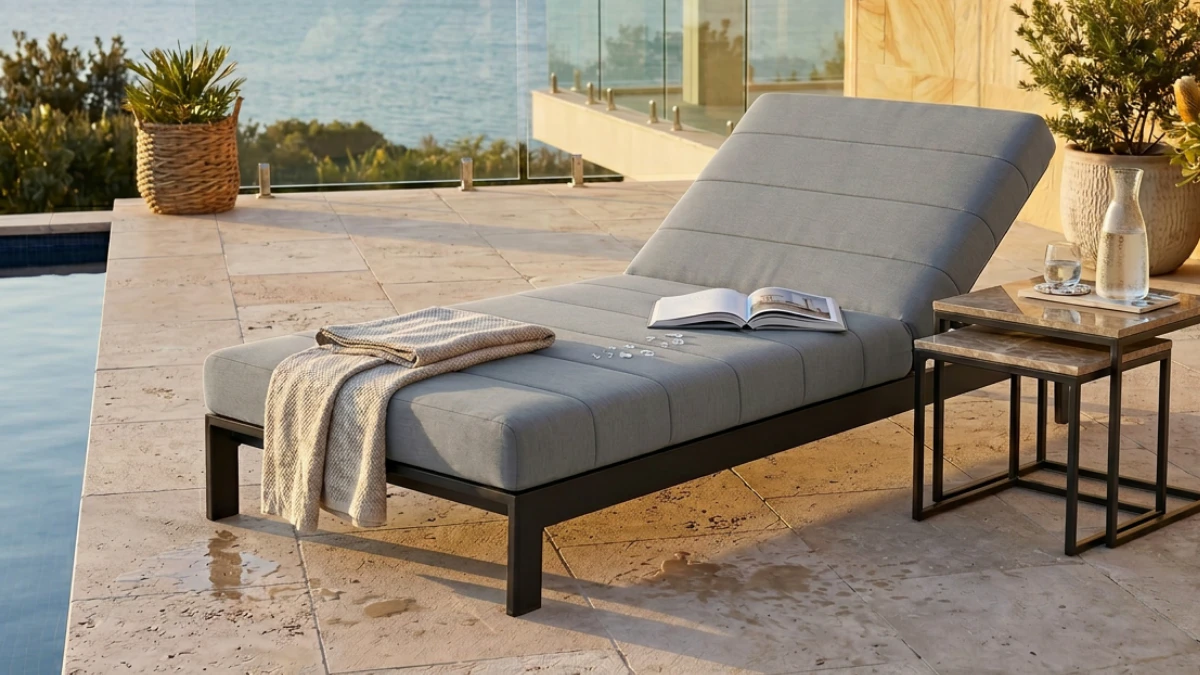
Pictured: Quick dry foam lets water drain through rather than sit in the cushion. Performance fabrics like Sunbrella and Olefin, repel water so the cushion dries faster.
Size, weight and how you actually use it
A pool lounger needs to move. You chase the sun across the afternoon, pull it into the shade at the peak of the day, and clear it for a party. A lightweight aluminium frame makes that effortless, where a heavy timber piece stays exactly where it landed.
Think about height as well. A lower, longer pool lounger suits sunbathing and lying flat, while a slightly higher seat is easier to get in and out of with wet hands. And measure your paving. You want enough room to walk behind a lounger without stepping into the pool, which usually means around a metre of clearance. Browse the full pool sun lounger collection with your space in mind, since the right size is the one that fits how you move around the water.
Adjustable or fixed recline
This is a real decision for a pool lounger. A fixed flat lounger is made purely for lying back and tanning. An adjustable backrest lets you sit up to read, watch the kids in the water, or share a drink, then drop flat again for a nap.
If your pool area is as much about supervising and socialising as sunbathing, the adjustment is worth having. If it is purely a sun trap, a clean fixed shape may be all you need. Either way, check the mechanism feels solid, because it is the part that gets the most use by a pool.
The pieces that complete the setup
A great poolside is more than a single lounger. A pair with a shared side table is the most popular setup and gives two people somewhere to rest a drink. A double sunbed or daybed turns the area into a centrepiece for sharing. Covers protect the cushions between long stretches of use and add years to the set. If you are styling the whole space, our wider outdoor furniture range lets you match the loungers to dining and lounge settings so the area reads as one considered space rather than a few separate pieces.
Looking after a pool lounger
A good pool lounger asks very little, but a little care goes a long way. Rinse off chlorine and salt now and then, especially after heavy use, since both work away at fabric and finishes over time. Wipe the frame and weave with warm water and a mild detergent. Let the quick dry foam do its job and leave cushions to dry rather than storing them damp. And use a cover over the cushions when the area is not in use for a while. Do that much and a quality pool lounger will look the part for years rather than seasons.

Pictured: A pair with a shared side table is the most popular poolside setup.
A pool lounger earns its place over years of wet feet, sunscreen and afternoon sun, so it pays to choose one built to take it. Come and see which ones are made for the water and which only look the part. Find your nearest showroom.







